

Factors to Consider When Shopping For Bunk Beds
Bunk beds are an excellent way for children to save space while also encouraging siblings to connect. When shopping for a new bunk bed, there are a few factors to take into consideration.
Single bed bunk beds usually include support slats, which eliminate the need for a box spring. They can accommodate up to 250 pounds per level. Many bunk beds also include ladders or stairs.
Size
When you are looking for bunk beds, think about who will be using it and how many people will share the space. A twin over full arrangement is great for a couple or two adults, whereas a queen over full bunk can sleep three teenagers or children comfortably. Some beds have a trundle that allows you to sleep an additional guest. You will also need to choose how you want the beds to be stacked.
The materials used to construct a bunk bed can have a significant impact on its weight capacity. Solid wood and metal bunks typically hold more weight than softer materials such as particle board or pressed wood. Find frames with sturdy slats as well as additional supports to ensure the bed can safely accommodate multiple sleepers.
The majority of bunk beds that are off-the-shelf have ladders that are permanently attached and cannot be detached. Some brands, however, offer an option that can be moved to either the left or right side of the bunk. This flexibility lets you select the best option for the position of the stairs. You can pick an angled ladder that leaves more room in the lower bunk, or a straight ladder that is less intrusive.
When choosing a bunkbed, you should also think about its height and whether it has guardrails at the top of the bed. For safety reasons, it is recommended to put bunk beds with guardrails away from ceiling fans and other furniture. Standard bunk beds are 8 feet high (with 6 feet being considered low, and 9 feet as high). However there are higher options like treehouse style bunks which offer your children the sensation of sleeping on the top of the world.
Bunk Beds Store -traditional bunk bed shapes such as L-shaped bunks that run lengthwise along a wall and take up less floor space than traditional twin over full models and can be incorporated into rooms with lower ceilings. However, Gil notes that these designs can be difficult for children to navigate, and might not work when you intend to separate the bunks into two separate beds.
Style
Bunk beds are an excellent option to maximize the space in bedrooms. They share the same floor area as two single beds but give more space for clothes, toys and other furniture. They also free up more vertical space that can be used for storage or to create a play area.
There are many alternatives to choose from, whether you're looking for an easy metal bed to be a perfect match to a modern Scandinavian style or a sturdy detachable bed that can be split into two beds. The ESS Missouri Detachable Bunk Bed, for example, offers both supreme strength and the ability to adapt to changing demands by separating into two separate beds.
Some bunk bed designs may require full mattresses on both the top and bottom levels, while others will work with either twin or twin XL size mattresses. Full size mattresses that are slightly larger and longer than twin mattresses, are typically more suitable for the lower bunk. Twin XL mattresses however are 5 inches larger than traditional full beds, and offer an extra inch of stretch and support. They are available in a broad range of thicknesses to provide the best level of comfort for all sleepers.
You can choose between ladder or stairs when you choose a bunk bed with a single bed. Some models come with stairs that are simpler to use than ladders, and allow children the freedom to move around the bunk bed without the fear of falling. They're particularly useful in smaller rooms where ladders might not fit in.
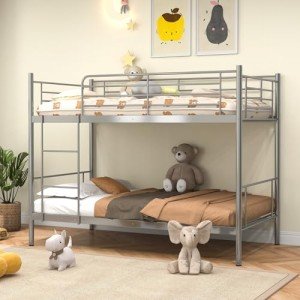
Bunk beds are usually constructed to include integrated storage solutions, which can help keep bedrooms tidy and clutter-free. Pick single bed bunks that have integrated desks that provide a place where kids can study and play. Or you can choose single bunk beds that come with under-bed storage drawers. Bunk beds are designed with smart features that emphasize functionality, while still maintaining a stylish appearance.
Safety
Injuries resulting from bunk beds are not common, but with the right safety features, these risks can be minimised. For instance there are beds that have guardrails on both sides of the bed that run to the floor, reducing the risk of falling off or getting wedged between the bunk and wall. Moreover, ladders should be robust and secure. They should not have gaps larger than 16cm and be firmly fixed to the frame to increase stability. Ladders should also be regularly inspected for loose rungs which could pose the risk of falling.
A bunk bed should not be used to hang clothing or other objects like sporting equipment such as skipping ropes, as this can cause strangulation. Children should be taught to hang things on clothing hangers instead. They should also be encouraged to use their top bunk as an area for reading or a study instead of a place for play.
The mattress you choose is crucial for bunk bed safety. The mattress should fit snugly into the frame, with no more than a 1 inch (2.5 cm ) gap on either side. This reduces the likelihood of limb entrapment and also prevents the mattress from sagging, which can cause a fall risk.
It is crucial to follow the instructions given by the manufacturer when assembling and caring for your bunk bed. It's also essential to educate yourself the latest bunk bed safety regulations and standards in your nation.
While bunk beds are a great way to save space, they can turn rooms into a chaotic mess if children aren't taught how to keep the room clean and organised. To help them develop this habit, parents should encourage them to clean up after themselves and place their toys away in a toy box or other storage container. Bunk beds should be kept clear of items that could be pulled, like blinds, curtains or ceiling fans, as well as light fixtures. By following these simple rules, you will let your child enjoy their bunk bed safely and comfortably. In healthcare facilities bunk beds are an excellent space-saving solution to make room for rooms that are crowded with patients.
Stairs or Ladders
The proper method for access is important as it determines how much space the bunk bed will take up in your home. The best solution depends on your family's age, room size and layout and your personal preferences and aesthetic. Although bunk beds with ladders are more expensive they are also more secure for children and those who have mobility issues as they don't require climbing vertically. They usually take up less space which is helpful in small rooms.
Ladders are not for everyone. They can be more difficult to use than stairs and require a particular level of agility and confidence. They also require a greater distance from the ground and are a bit challenging for young children. Ladders are still an affordable and practical option, especially for older children and adults. They are also equipped with safety rails that help prevent injuries and accidents.
Bunk beds with stairs offer a safe alternative to ladders and complement many different room styles including rustic log designs that look amazing in a rustic vacation cabin to modern-day metal bunks with clean white finishes. Some of these bunks come in an L-shaped configuration that works well in the corner of bedrooms, making them the perfect option for families with multiple children sharing a single room. Bunks that have stairs can include other features such as drawers built into the bunk or a twin-trundle. This makes them a perfect option for those who want to maximize their bedroom space.
When you're choosing a straight ladder, an angled ladder or an escalator, it's a good idea to include your children in the process of making a choice because they'll likely be using the bed for a long time to come. Staircases are a attractive option visually and can be used for storage as well and are a great choice for families with limited storage or those who want their beds to be the center of the room.